
Personal Budget Categories: The Beginner's Guide to Organizing Your Money
Learn how to organize your spending with practical personal budget categories. Discover flexible frameworks, essential spending buckets, and tips to avoid over-complicating your finances.

Why Spending Categories Matter (and Why Most People Get Them Wrong)
When starting a financial routine, organizing transactions into clear personal budget categories is one of the most effective steps you can take. Categories transform raw, disorganized transaction histories into meaningful cash flow insights. They help you answer crucial questions: Where is my money actually going every month? and Where can I comfortably trim expenses without feeling deprived?
However, many beginners fall into a common trap when creating their first budget: downloading a spreadsheet or template with 50 or 60 hyper-specific lines. Tracking separate line items for paper towels, gourmet coffee, movie tickets, and dry cleaning creates immense friction. Within a few weeks, categorization fatigue sets in, tracking falls behind, and the entire budget is abandoned.
A successful category structure balances detail and simplicity. It should provide enough visibility to guide smart financial decisions without requiring an hour of manual sorting every evening.
Choosing the Right Budget Framework
There is no single universal category list that fits every individual or family. Your ideal setup depends on your lifestyle, household structure, and financial priorities. Personal finance experts generally group categorization strategies into three broad structural approaches:

1. The 3-Bucket Framework (50/30/20 Rule)
Popularized as a straightforward baseline for net income, this approach divides all spending into three macro buckets:
- Needs (50%): Non-negotiable survival obligations and contractual commitments, such as rent, basic groceries, utilities, and debt minimums.
- Wants (30%): Discretionary lifestyle choices, including restaurant dining, entertainment, streaming subscriptions, and hobbies.
- Savings & Financial Goals (20%): Emergency fund contributions, retirement investments, and debt paydown beyond minimum requirements.
2. Fixed vs. Variable vs. Sinking Funds
This framework organizes expenses based on how predictably money leaves your account:
- Fixed Expenses: Consistent, recurring monthly bills with predictable amounts (e.g., mortgage, rent, insurance premiums).
- Variable Expenses: Regular monthly requirements where amounts fluctuate based on consumption or choices (e.g., groceries, fuel, home energy).
- Sinking Funds (Irregular Expenses): Known non-monthly costs spread into monthly savings bites (e.g., annual auto registrations, quarterly taxes, holiday shopping).
3. Theme-Based Life-Area Framework
This approach uses 10 to 20 broad spending categories grouped by core life areas. It provides clear visibility into specific habits while avoiding micro-level tracking fatigue.
Categorization Strategy Matrix
| Strategy | Key Strengths | Primary Trade-Offs |
|---|---|---|
| 3-Bucket (50/30/20) | Extremely simple; low maintenance effort. | Very broad; does not pinpoint specific overspending areas. |
| Zero-Based (ZBB) | Maximum control; gives every dollar a deliberate purpose. | Time-intensive; requires active monitoring throughout the month. |
| Fixed vs. Variable | Clarifies core baseline costs and non-negotiable liabilities. | Requires manual sorting within individual lifestyle areas. |
| Micro-Categories (40+) | Deep analytical visibility into precise purchasing habits. | High burnout risk for beginners due to categorization fatigue. |
Core Personal Budget Categories and Examples
If you prefer a balanced, theme-based framework, these primary categories cover almost every personal expense while keeping tracking straightforward:
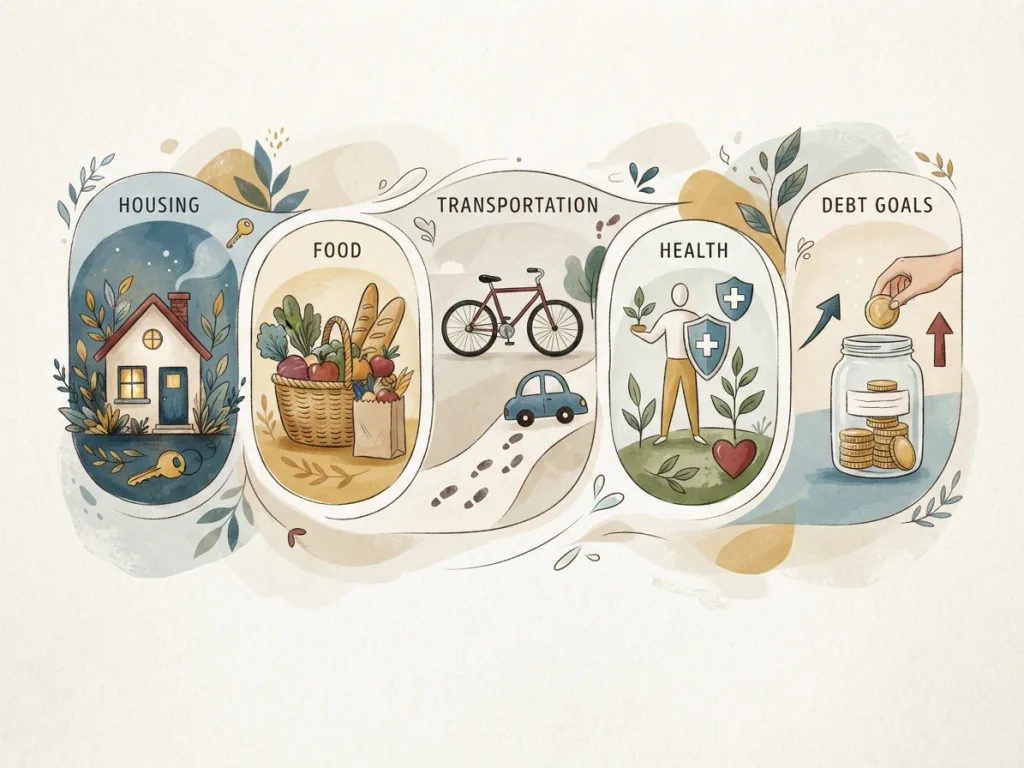
1. Housing & Utilities
Housing is typically the largest single monthly expense. Keeping basic shelter and utility commitments distinct from discretionary spent money is vital.
- Rent or mortgage payments
- Property taxes and home association (HOA) fees
- Basic home maintenance and repairs
- Electricity, water, natural gas, and trash services
- Mobile phone plan and basic home internet
2. Food (Groceries vs. Dining Out)
One of the most valuable budget rules is to always separate home groceries from dining out. Lumping all food spending into a single "Food" bucket often obscures major discretionary leakage.
- Groceries (Need): Essential supermarket purchases, home cooking ingredients, and basic household items.
- Dining Out (Want): Restaurants, takeout, food delivery services, coffee shops, and bars.
3. Transportation
Whether you own a vehicle or rely on transit, group your routine commuting costs together:
- Fuel or electric vehicle charging
- Public transportation passes and rideshare fares
- Auto insurance premiums
- Routine auto maintenance (oil changes, tire rotations)
4. Health & Medical
Essential health costs should be tracked separately to ensure necessary care is always prioritized in your monthly cash flow:
- Health, dental, and vision insurance copays
- Prescription medications and medical supplies
- Emergency care or out-of-pocket doctor visits
5. Debt Payments & Financial Goals
Managing debt obligations and building wealth require ongoing attention. Minimum debt payments function as essential needs, while extra payments act as wealth-building goals:
- Credit card minimums, student loans, or personal loan payments
- Emergency savings fund contributions
- Retirement account contributions (IRAs, 401ks, or brokerage investments)
- Extra principal debt payoff
6. Personal & Lifestyle
This category holds discretionary choices that reflect your personal interests and social life. Setting a clear spending ceiling here protects your savings goals without sacrificing life enjoyment.
- Digital subscriptions, streaming apps, and software
- Entertainment, concert tickets, and movies
- Hobbies, gym memberships, and recreation
- Apparel and personal grooming
- Gifts and charitable donations
7. Sinking Funds & Periodic Expenses
Sinking funds prevent predictable, non-monthly expenses from feeling like emergency budget surprises. By dividing annual or periodic costs by 12, you save manageable monthly amounts into designated buckets:
- Annual auto registration and inspection fees
- Quarterly or bi-annual insurance premiums
- Holiday gifts and annual celebration budgets
- Vacation and travel savings
How Many Categories Do You Actually Need?
For most working adults, households, and students, the sweet spot is between 10 and 20 total categories. Keeping your category list within this range yields actionable financial clarity without making manual logging feel like a second job.
The Power of a Buffer Category
No matter how thoroughly you plan, minor unexpected expenses will happen. A small Miscellaneous or Buffer category—typically set to 2% to 5% of your total monthly income—helps absorb small, unpredictable expenses like a forgotten school fee or a minor household hardware replacement. This cushion keeps your core budget intact without requiring constant structural adjustments.
Common Budgeting Mistakes to Avoid
- Treating Wants as Non-Negotiable Needs: While internet service is a modern necessity, tier-one gigabit fiber combined with premium streaming packages is a luxury choice. Separate baseline needs from lifestyle enhancements.
- Ignoring Periodic Costs: Forgetting about annual software renewals or vehicle inspections forces you to pull money from emergency savings or accumulate credit card debt. Use sinking funds to smooth these costs throughout the year.
- Refusing to Adjust Categories Over Time: Life circumstances evolve. Adjust your personal budget categories when you change jobs, move homes, welcome a child, or pay off major debts.
Simplifying Category Tracking with Modern Tools
Even a well-designed category framework requires consistent updates to remain useful. Manual spreadsheet logging can quickly become a chore, especially when sorting through multiple transactions across bank accounts.
Modern expense tracking apps offer smart assistance that dramatically cuts down tracking friction while keeping you in full control. Designed around the principle to track your money effortlessly, MyMoney simplifies category management through intuitive input capabilities:
- AI Quick Entry: Type or speak spending naturally—such as "$45 for grocery items at target"—and the system automatically prepares an organized transaction draft with the correct expense category ready for your review and confirmation.
- AI Receipt Scanner: Scan paper receipts from store runs; key line items are parsed into an editable review flow, allowing you to split groceries and household supplies instantly.
- Custom Budgets & Clear Visual Reports: Easily review fixed vs. variable spending across your custom categories to spot trends and keep your financial goals on track.
By leveraging smart entry tools as assistance, you retain full decision-making authority over your money while eliminating tedious data entry.
Frequently Asked Questions About Budget Categories
What is a good miscellaneous budget category percentage?
Setting aside 2% to 5% of your take-home pay for a miscellaneous or buffer category is generally recommended. This handles minor, unexpected daily expenses without disrupting your primary spending categories or emergency savings.
How should freelancers categorize fluctuating income?
Freelancers and variable-income earners should base their monthly category allocations on their baseline minimum expected income. In higher-earning months, excess revenue should be directed toward a dedicated income stabilization fund or long-term financial goals rather than inflating everyday personal categories.
Should sinking funds be kept in separate bank accounts?
While you can hold sinking fund money in a separate high-yield savings account to earn interest, it is not strictly necessary. Dedicated expense tracking software and modern budgeting tools allow you to track sinking fund balances virtually within a single savings account.
Final Thoughts: Keep Your Framework Flexible
The ultimate goal of establishing personal budget categories is financial clarity, not rigid perfection. Start with a lean set of broad categories, separate essential needs from discretionary wants, and use sinking funds for irregular bills. As your habits and financial goals evolve, adjust your categories to fit your life. With the right framework and supportive tools, tracking your cash flow becomes a fast, stress-free habit that puts you in control of your financial future.